A whole-house repipe in Tacoma typically runs between $4,500 and $15,000, with most homeowners paying $7,000–$10,000 for a standard three-bedroom home.
The final number depends on your home's size, the pipe material you choose (PEX vs. copper), how accessible your existing plumbing is, and whether the project uncovers additional work behind the walls.
If you're reading this, you're probably dealing with rust-colored water, water pressure that's dropped over the last few years, or a home inspector's note that says "galvanized pipes, recommend replacement." Roughly 62% of Tacoma's housing stock was built before 1970, which means thousands of homes in the Stadium District, North End, Hilltop, McKinley Hill, and Lincoln still have original galvanized steel plumbing that's 55 to 80+ years old.
What Drives the Cost of Repiping a House?
Repiping isn't a one-price-fits-all project. Two homes on the same block in Proctor can have wildly different repipe costs based on a handful of variables.
Home Size and Number of Fixtures
The biggest cost driver is square footage combined with the number of water-using fixtures (sinks, toilets, showers, hose bibs, laundry connections). A two-bedroom, one-bath home requires far less pipe and labor than a four-bedroom with three bathrooms, a kitchen island sink, and an outdoor shower.
Home Size
Fixture Count
Estimated Cost
Small (under 1,200 sq ft)
6–8 fixtures
$4,500–$7,000
Medium (1,200–2,000 sq ft)
8–12 fixtures
$7,000–$10,000
Large (2,000–3,000+ sq ft)
12–18 fixtures
$10,000–$15,000+
These ranges assume PEX piping. Copper adds 40–60% to the material and labor cost.
Pipe Material: PEX vs. Copper
The choice between PEX and copper tubing affects both the material bill and the labor hours.
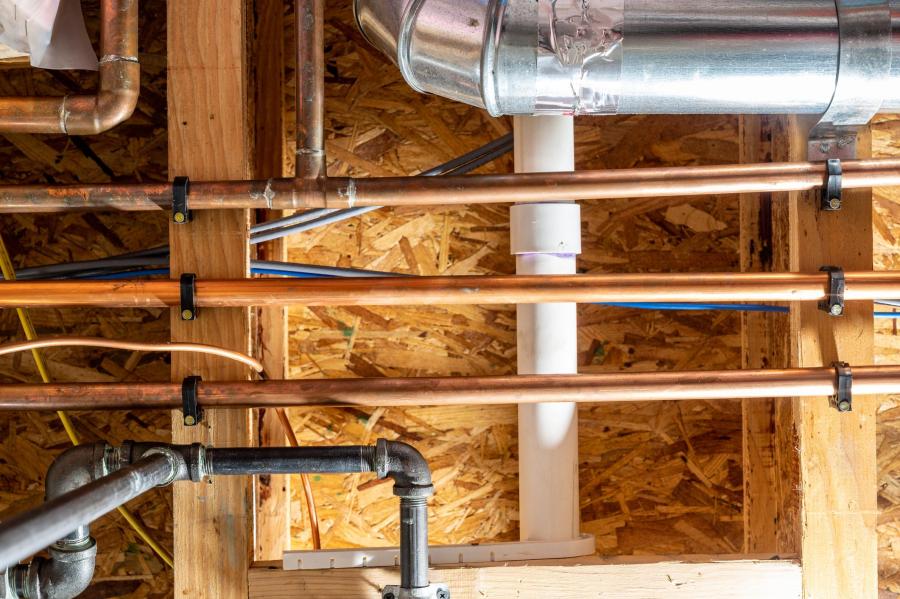
PEX (cross-linked polyethylene) has become the standard for residential repiping in the Pacific Northwest. It's flexible enough to route through walls and around corners without joints at every turn, which means fewer fittings and faster installation. PEX also resists freezing better than copper. When water inside PEX freezes, the tubing expands instead of cracking, then returns to its original shape once it thaws. In a region where cold snaps can catch homes off guard, that matters.
Copper lasts longer on paper (50–70 years vs. 40–50 for PEX) and naturally inhibits bacterial growth. But copper installation runs 58-68% more expensive than PEX because the material costs more and takes considerably longer to install. Every joint needs to be soldered, every corner requires a fitting.
Material
Cost Per Linear Foot (Installed)
Full Repipe (1,500 sq ft home)
PEX
$1.50–$4.00
$4,500–$8,000
Copper
$4.00–$12.00
$8,000–$15,000
CPVC
$1.50–$3.25
$4,000–$7,500
For most Tacoma homeowners replacing galvanized steel, PEX is the practical choice. It delivers clean water, reliable pressure, and decades of service at roughly half the cost of copper.
Accessibility and Home Layout
A single-story home with a crawl space is the easiest and least expensive scenario. Plumbers can access most pipe runs from below the floor without cutting into many walls.
Multi-story homes cost more. Pipe runs between floors require opening walls and ceilings, then patching and finishing after the plumbing work is done. Homes built on concrete slabs are the most expensive to repipe because the existing pipes often run beneath the concrete, requiring the crew to either reroute through the attic and walls or cut into the slab itself.
Many older Tacoma homes, especially in the Stadium District and Hilltop, have unusual layouts, additions built over decades, and plumbing that's been patched multiple times. Those variables add labor hours that a cookie-cutter estimate won't capture.
Labor Costs
Labor accounts for roughly 70% of a typical repiping project's total cost. Licensed plumbers in the Puget Sound area charge $75-$150 per hour depending on experience and the scope of work. A two-person crew working three full days on a medium-sized home racks up most of the bill before a single foot of pipe is counted.
The "cheapest bid" approach backfires on repiping projects. The difference between a $6,000 quote and an $8,000 quote is usually labor hours. Fewer labor hours means either a smaller crew, less experienced plumbers, or shortcuts in how the pipe is routed and secured.
Budget an additional $500-$2,000 for drywall repair and repainting after the plumbing work is complete. Some repipe crews include basic patching in their price; others don't. Ask before you sign.
Why Galvanized Pipes Need to Go
If your Tacoma home was built before 1960, there's a strong chance your water supply lines are galvanized steel. These pipes were standard residential plumbing from the 1930s through the late 1960s. They were designed to last 40–60 years. The math is not in their favor.
The Corrosion Problem
Galvanized steel pipes corrode from the inside out. Over decades, the zinc coating that originally protected the steel breaks down. Rust and mineral deposits build up inside the pipe, gradually restricting water flow. A pipe that started with a half-inch interior diameter might have an effective opening of a quarter-inch or less after 50 years of buildup.
The visible symptoms are familiar to anyone living with old plumbing: low water pressure that worsens over time, rust-colored water (especially when you first turn on a faucet in the morning), and leaks that pop up in new spots every few months.
The EPA's Lead and Copper Rule Improvements (LCRI), finalized in October 2024, now requires water systems to replace lead service lines and galvanized lines that were ever downstream of lead pipes within 10 years. That federal mandate covers the service line from the water main to your home. But the pipes inside your home? Those are your responsibility.
The EPA is clear: there is no safe level of lead exposure, and children and pregnant women face the highest risk. If you have galvanized pipes in a pre-1960 home, testing your water for lead is a reasonable first step.
PNW Climate Adds Pressure
Western Washington's heavy rainfall and persistent moisture accelerate pipe corrosion, especially in homes with crawl spaces where ambient humidity stays high year-round. I've seen galvanized pipes in Tacoma crawl spaces that looked like they'd been underwater for a decade: heavy rust, flaking metal, green mineral deposits at every joint. The PNW climate doesn't cause the failure, but it speeds up the timeline.
A North End homeowner in her early sixties contacted us after her home inspector flagged galvanized pipes during a refinance appraisal. She'd been living with slowly declining water pressure for years, figured it was just "how old houses are." Her shower could barely produce a steady stream. The repipe took three days. When she turned on the shower for the first time afterward, she called our office to ask if something was wrong because the pressure was so much stronger than anything she'd experienced in that house. We get that call after almost every repipe. It never gets old.
The questions I hear most from homeowners are about disruption. "How long will my water be off? Can I stay in the house? Will my walls be destroyed?" Fair questions. A typical repipe moves through three phases.
Day 1: Assessment and Prep
Before any pipe is cut, the crew walks the entire home to map the existing plumbing system, identify the most efficient routes for new pipe, and note any areas that will need wall or ceiling access. This planning step saves real time and money during installation.
The crew protects your floors, furniture, and fixtures. Plastic sheeting goes down in work areas. Drop cloths cover anything that could collect dust.
Days 2–3 (Sometimes 4): Pipe Installation
The crew opens access points in walls and ceilings, removes the old galvanized pipe section by section, and installs new PEX (or copper) lines. Water is typically off during the working hours of each day but restored by evening so you can use bathrooms and the kitchen overnight.
For a standard three-bedroom Tacoma home, the pipe installation itself usually takes two to three days. Larger homes, multi-story layouts, or homes with slab foundations may take four to five days.
A Lakewood homeowner who'd been dealing with orange-tinged water for three years decided to repipe after discovering lead concerns with his galvanized plumbing. He was a real estate investor prepping the property for sale, worried the project would drag on for weeks. The full repipe on his 1,960-square-foot, two-story home was done in three working days. He had the property listed ten days later with new plumbing as a selling point.
Day 4–5: Patching, Inspection, and Cleanup
After the plumbing passes the Pierce County inspection, the crew patches drywall, primes, and prepares surfaces for paint. Some homeowners handle their own painting; others want the crew to finish it completely. Either approach works.
The final step is a full system pressure test and flow check at every fixture. You should see consistent, strong water pressure throughout the house. The difference from what galvanized pipes were delivering is immediate.
How to Evaluate a Repiping Quote
Not all repipe estimates are structured the same way. Comparing a $6,000 quote against a $10,000 quote without understanding what's included leads to surprises.
What Should Be Included
A complete repiping estimate should itemize:
Pipe material and specifications (PEX type/brand, diameter, fittings)
Number of fixtures being connected
Shutoff valve replacement at each fixture (angle stops and supply lines)
Pressure regulator valve inspection or replacement
Permit fees and who handles the permit application
Drywall repair — what level of patching is included
Cleanup and debris removal
Warranty — on both materials and labor
Red Flags in a Quote
Watch for estimates that lump everything into a single line item with no breakdown. If a plumber can't tell you what material they're using, how many fixtures they're connecting, or whether permits and patching are included, that should tell you something. A project that involves opening your walls deserves a detailed estimate.
Repiping is not the kind of project where you want to chase the lowest bid. The difference between a good repipe and a bad one lives inside your walls for the next 40 years. A crew that's rushing to hit an unrealistically low price cuts corners in places you'll never see until something leaks.
An Edgewood couple hired a plumbing company to repipe their 1958 ranch home. Partway through, the original crew stopped showing up. The job sat half-finished for weeks. Walls open, pipes partially connected, water shut off. They called us to finish what someone else started. As Matthew Rapp put it in his review: "They did it with the attention to detail they talk about on their website, that is a real thing! What impressed me most was that this was a very small project... and they still took the time, amidst all their major projects, to handle this for me the right way." We hear versions of that story more often than anyone in this industry should be comfortable with.
Why the W-2 Crew Model Matters for Repiping
Most plumbing companies subcontract their labor. They hire independent contractors who move between jobs and companies. The problem with that model is straightforward: the person doing the work inside your walls has no long-term accountability to the company whose name is on the truck.
At GTG, every plumber is a W-2 employee. Hector and Brad are on our team full-time. They wear our uniforms, drive our vans, and show up to your home as GTG representatives. Not freelancers picking up a side job. If something needs attention six months after a repipe, the same people who did the work are the ones who come back.
That employment model costs us more to operate. But it's the only way I know to guarantee that the quality you're promised is the quality you actually get.
Pierce County Permit Requirements
A whole-house repipe in Tacoma, Lakewood, Puyallup, Bonney Lake, or anywhere in Pierce County requires a plumbing permit. Under Washington state law (RCW 18.106), all plumbing work that involves installing or replacing piping must be performed by a licensed plumber and covered by a permit.
The permit process has four steps:
Application — Your plumbing contractor files the permit with Pierce County's Development Center (or the City of Tacoma, depending on your jurisdiction)
Fee — Residential plumbing permits typically run $100-$350 depending on the scope of work
Rough-in inspection — The county inspector examines the new piping before walls are closed up, checking sizing, slope, hangers, and code compliance
Final inspection — After everything is connected and walls are patched, a second inspection confirms the system holds pressure and all fixtures function correctly
Any reputable plumbing company handles the permit process for you. If a contractor suggests skipping the permit to "save money," walk away. Unpermitted plumbing work can void your homeowner's insurance, create problems during a home sale, and leave you liable if something fails.
Should You Repipe or Keep Patching?
Every plumber has heard this question: "Can you just fix the leak and leave the rest?" Sometimes, yes. A single leaking joint on an otherwise healthy copper system doesn't justify a full repipe. But galvanized steel is a different situation.
Consider repiping when:
Your home has galvanized steel pipes and was built before 1970
You're experiencing recurring leaks in different locations (not the same spot repeatedly)
Water pressure has gradually declined across multiple fixtures
Your water runs rust-colored, especially first thing in the morning
You've had two or more emergency plumbing repairs in the past year
A home inspector flagged your pipes during a sale or refinance
You plan to stay in the home for 5+ more years
Patching may be enough when:
You have copper or PEX pipes with an isolated failure point
The issue is limited to one section of pipe (under a specific sink, for example)
Your home was built after 1970 and hasn't shown systemic plumbing problems
The answer most homeowners don't want to hear: once galvanized pipes start failing, they don't stop. Fixing one leak while ignoring the 200 feet of identical pipe behind your walls is like putting a new tire on a car with a rusted-out frame. The tire's fine. Everything around it isn't.
Does Insurance Cover Repiping Costs?
Typically, no. Homeowner's insurance covers sudden, accidental water damage (a pipe burst, for example) but not the cost of replacing aging pipes. If a galvanized pipe fails and causes water damage to your floors, walls, or belongings, your insurance may cover the damage repair but not the repiping itself. Some policies have exclusions for damage caused by "lack of maintenance" on known aging systems. Check with your provider for your specific coverage.
Does Repiping Increase Home Value?
Yes. In Tacoma's market of older homes, the return often exceeds the cost of the project.
A whole-house repipe eliminates a major red flag for home inspectors and buyers. Galvanized pipes on an inspection report can stall a sale, trigger renegotiation, or scare off buyers entirely. A home with new PEX plumbing and a clean inspection report moves faster and pulls stronger offers.
For real estate investors working in Tacoma's older neighborhoods, repiping before listing is one of the highest-ROI improvements you can make. It removes an objection that kills deals, and it's a line item on the inspection report that reads "new plumbing throughout" instead of "galvanized steel, recommend replacement."
Schedule Your Free Repiping Estimate
If your Tacoma-area home has galvanized pipes, declining water pressure, or rust-colored water, a repipe assessment is the first step. We'll walk your home, map the existing plumbing, identify the best approach for your layout, and give you a detailed, itemized estimate with no hidden costs.
GTG Plumbing serves Tacoma, Lakewood, Puyallup, Bonney Lake, and the greater Pierce County area. Every plumber on our team is a W-2 GTG employee. No subcontractors.
Call GTG Plumbing to schedule your free repiping estimate, or fill out the form on our website. We'll get back to you within one business day.
Updated: May 27, 2026 Author: Gary Gustafson Location: Tacoma, WA
For a standard Tacoma-area home (1,200–2,000 square feet), a PEX repipe typically costs $7,000–$10,000, including labor, materials, permits, and basic drywall repair. Smaller homes can cost around $4,500, while larger or multi-story homes may cost $12,000–$15,000. PEX tubing costs roughly half as much as copper and installs faster, which reduces the labor portion of the bill.
How long does whole-house repiping take?
Most residential repipes in the Tacoma area take two to four working days for the plumbing work itself. A standard three-bedroom home typically takes three days. Add one to two days for drywall patching and inspection. Your water will be off during work hours each day but restored each evening. Larger homes, multi-story layouts, and concrete slab foundations can extend the timeline to five days or more.
Yes. Washington state law (RCW 18.106) requires a plumbing permit for any project that involves installing or replacing piping. Pierce County permit fees for residential repiping typically run $100–$350. The permit process includes a rough-in inspection (before walls are closed) and a final inspection. Your plumbing contractor should handle the permit application as part of the project.
Yes. Most homeowners stay in their home throughout the repiping process. Water is typically shut off during working hours (roughly 8 AM to 5 PM) and restored each evening. Plan to have bottled water on hand for drinking during work hours, and expect some noise and dust. The crew will need to cut into walls and ceilings to access pipe runs. If you have young children, elderly family members, or pets that are sensitive to noise and activity, you may want to plan daytime outings during the installation days.
Check the exposed pipes in your basement, crawl space, or utility area. Galvanized steel pipes are dull gray and often show visible rust or mineral buildup at the joints. If you scratch the surface with a coin or key and see a silver-gray color underneath, it's galvanized steel. Copper pipes are copper-colored (sometimes green with patina). PEX is flexible plastic, typically red, blue, or white. If your home was built before 1960 and you're unsure, any licensed plumber can identify your pipe material during a brief inspection.
Both are solid materials. PEX is the most common choice for residential repiping today because it costs less, installs faster, and resists freezing, which matters in Pacific Northwest homes that occasionally face cold snaps. Copper lasts longer (50-70 years vs. 40-50 for PEX) and naturally inhibits bacterial growth. For most Tacoma homeowners replacing galvanized plumbing, PEX offers the better combination of cost, durability, and performance. Talk to your plumber about your specific situation, since factors like water chemistry and home layout can change the recommendation.
If your low water pressure is caused by corroded galvanized pipes restricting flow, yes. A repipe will restore full water pressure throughout your home. This is the most common cause of pressure loss in pre-1970 Tacoma homes. But low pressure can also come from issues outside your home: municipal supply pressure, a failing pressure regulator valve, or a partially closed main shutoff. A good plumber will diagnose the root cause before recommending a full repipe.